Can You Get Divorce Without a Lawyer in Utah?
Written and reviewed by the divvi team. How we research and check this.
Getting a divorce without a lawyer in Utah is legally possible, and for couples who agree on all major terms, it is often the faster and cheaper path. Utah courts allow self-representation, known formally as proceeding "pro se," in divorce cases. You must meet the filing requirements and follow court procedures; agreement between spouses makes self-filing simpler but is not a requirement for representing yourself. If both spouses can agree on property, debts, custody, and support, the DIY divorce process is well within reach. This article walks you through the legal requirements, official resources, step-by-step filing instructions, and the real risks you need to know before you start.
Can you get divorce without a lawyer in Utah?
Yes. You may represent yourself in a Utah divorce, including when issues are contested. Whether doing so is a good choice depends on the issues, your ability to follow court procedures, and the help you need. An uncontested case is generally simpler because both spouses agree on the terms.
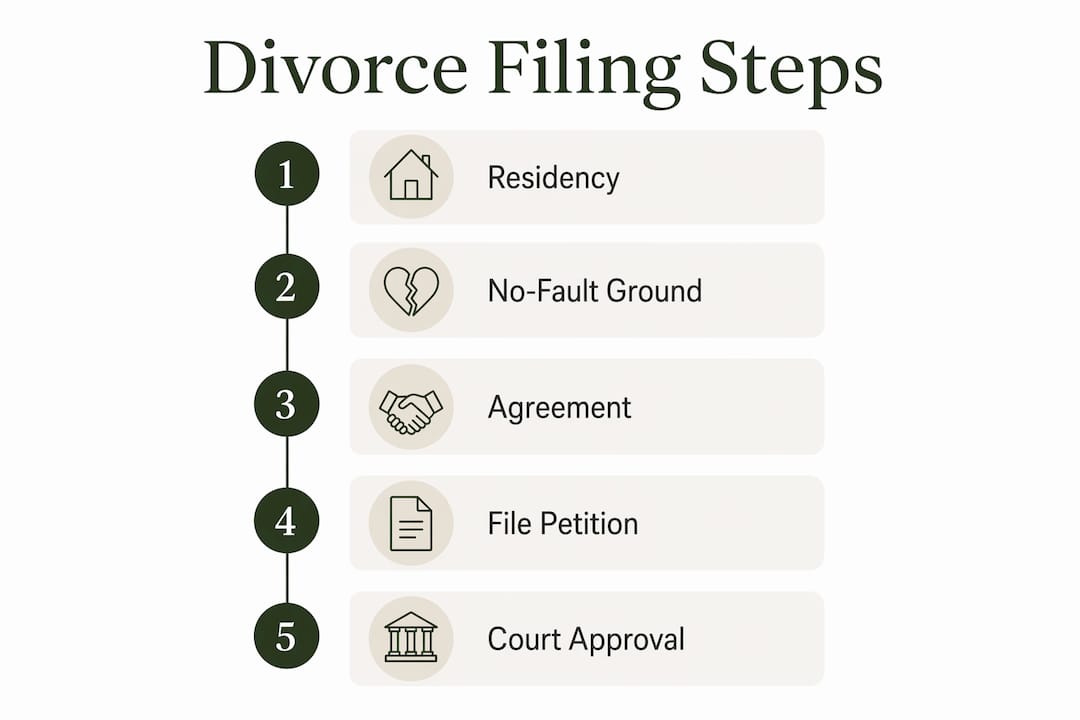
The Utah courts’ divorce guide explains that, generally, either spouse must have lived in one Utah county for at least three months immediately before filing. The usual waiting period is 30 days; a judge may waive it in extraordinary circumstances. Court review, required filings and unresolved issues affect the final timeline. See the current filing fees and fee-waiver options.
An uncontested divorce requires written agreement on:
- Division of all marital property and debts
- Alimony — spousal support, in the language most people use — its amount and duration, or a waiver of it
- Child custody and parent-time schedules
- Child support calculations
If any of those issues remain unresolved, the case becomes contested. Contested divorces typically take 6–12 months and almost always require attorney involvement or formal mediation.
What are the legal requirements for divorcing without a lawyer in Utah?
Generally, either spouse must have lived in a single Utah county for at least three months immediately before filing, and the case is filed in that county’s district court. Child-custody jurisdiction has additional requirements. Check the court’s residency guidance for exceptions and your situation.
Beyond residency, the legal standard for an uncontested divorce is strict. Any disagreement converts the case to contested, which typically extends the timeline to 6–12 months and often requires mediation. That shift also drives costs up dramatically. Contested divorces in Utah can run $10,000–$25,000 or more in attorney fees, compared to roughly $358–$500 total for a self-filed uncontested case.
You must state a legally recognized ground for divorce. "Irreconcilable differences" is the standard ground used in nearly all self-filed cases. You do not need to prove wrongdoing by either spouse.
Pro Tip: Before you file, write out a complete list of all assets, debts, and parenting arrangements. If you and your spouse can sign off on every item, you qualify for an uncontested filing. One unresolved item can change your entire timeline and cost.
How do Utah self-representation resources help you file?
Utah Courts provide official tools specifically built for people filing without an attorney. The primary tool is MyPaperwork, an online system that replaced the older OCAP platform. MyPaperwork generates customized divorce documents based on your specific facts. It adapts the forms to your situation, which significantly reduces the risk of rejection at the clerk's office.
The alternative is downloading standardized PDF forms directly from the Utah Courts website and completing them manually. That approach works, but it requires careful attention to every field. A single missing signature or incorrect date can result in the clerk returning your packet.
Here is what the official self-help resources cover:
- Petition for Divorce and supporting financial declarations
- Marital Settlement Agreement covering property, debts, and alimony
- Parenting Plan and Child Support Worksheet if children are involved
- Decree of Divorce for final court approval
The cost savings from self-representation are real. Utah family law attorneys average about $293 per hour. Even a straightforward attorney-assisted divorce can cost several thousand dollars in legal fees alone. Self-filing keeps your total out-of-pocket cost close to the filing fee.
Pro Tip: Use MyPaperwork even if you feel confident completing forms manually. The system flags missing information before you submit, which saves you a trip back to the courthouse.
Before choosing a document tool, compare MyPaperwork Utah and divvi. Both offer free document preparation; the comparison explains shared review, parenting-plan tools, signatures and filing guidance. You can use divvi even when you already agree on your terms.
What are the practical steps to file for divorce in Utah without a lawyer?
Filing a DIY divorce in Utah follows a specific sequence. Skipping or reordering steps causes delays. Here is the correct order:
- Confirm eligibility. Check the county-residency and other filing requirements. Identify which issues you and your spouse agree on and which remain disputed.
- Prepare your documents. Use MyPaperwork or the official Utah Courts PDF forms to generate your Petition for Divorce, Marital Settlement Agreement, and any parenting documents.
- File at the district court clerk's office. Submit your completed packet and pay the filing fee of approximately $358. The clerk assigns your case number and stamps your documents.
- Serve your spouse. Your spouse must receive official notice of the filing. The simplest method in an uncontested case is an Acceptance of Service, where your spouse signs a form confirming they received the papers. If your spouse will not sign, follow the court’s service instructions. A qualified adult who is not involved in the case, a sheriff or a process server may serve the papers.
- Wait for the response period. The response deadline is generally 21 days after service in Utah or 30 days after service outside Utah. In an uncontested case, they typically sign the agreement rather than file a formal response.
- Complete required courses if you have children. Utah mandates a Divorce Orientation course ($30) and a Divorce Education course ($35) for all parents before the court finalizes the divorce. Failing to complete these courses delays finalization.
- Wait out the 30-day period. The usual waiting period is 30 days after filing; the court can waive it in extraordinary circumstances.
- Submit final documents. File your signed Marital Settlement Agreement, Parenting Plan, and proposed Decree of Divorce. In most uncontested cases, the judge signs the decree without scheduling a hearing.
The entire process from filing to final decree typically takes 3–5 months when both spouses cooperate and all documents are correct.
What are the risks of getting a divorce without a lawyer?
Self-representation is legal, but it carries real risks. Courts do not invalidate a divorce simply because no attorney was involved. The danger is subtler. Unintentional unfavorable agreements are the primary risk when you proceed without legal guidance. You may agree to terms that seem fair in the moment but create financial or parenting problems years later.
The situations where self-representation creates the most exposure include:
- Complex asset division involving retirement accounts, pensions, or business ownership
- Disputes over the value of real estate or investment portfolios
- Custody arrangements with significant disagreements about parent-time
- One spouse having substantially more financial knowledge than the other
Divorce timelines and costs increase dramatically if a case moves from uncontested to contested. An agreement that falls apart after filing can reset your timeline entirely and pull you into a process that costs many times more than hiring an attorney from the start.
Limited-scope representation is a practical middle ground. Under this approach, a lawyer reviews key documents or drafts complex sections while you handle the rest of the filing yourself. You pay for only the hours you need, not full representation. This option works well when your case is mostly straightforward but includes one complicated asset or a custody detail you want a professional to review.
Key Takeaways
Self-representation is an option in Utah divorce cases. Agreement on all issues can simplify the process; disputed issues may make legal help especially useful.
| Point | Details |
|---|---|
| Residency requirement | Generally, either spouse must have lived in one Utah county for three months immediately before filing. |
| Agreement simplifies the process | Written agreement on all issues makes a case uncontested; self-representation is also possible in contested cases. |
| Use MyPaperwork | The official Utah Courts tool generates documents designed for filing and reduces filing errors. |
| Budget for mandatory costs | Plan for the $358 filing fee plus $65 in required parenting courses if children are involved. |
| Know when to get help | Limited-scope representation protects you in complex cases without the cost of full attorney fees. |
My honest take on DIY divorce in Utah
Many people approach self-filed divorce with the right intentions and then stumble on details that were entirely avoidable. The most common mistake is treating the Marital Settlement Agreement like a handshake deal. Courts enforce what you write, not what you meant. Vague language about "splitting the retirement account later" has derailed more than a few finalized divorces when one spouse later disagreed on the split.
The couples who succeed with a DIY divorce share one trait: they finished every hard conversation before they filed. Property, debts, parenting schedules, and support were settled in writing before a single form was submitted. That preparation is what makes the process feel manageable.
MyPaperwork is genuinely useful. The older OCAP system required more manual judgment. MyPaperwork asks you direct questions and builds the forms around your answers. If you have a straightforward case, it handles the paperwork well.
Where I think people underestimate the risk is with retirement accounts. A Qualified Domestic Relations Order, or QDRO, is a separate legal document required to divide a 401(k) or pension. It is not part of the standard Utah divorce packet. Many self-filers skip it, finalize the divorce, and then discover they cannot access the funds without going back to court. That single oversight can cost more to fix than hiring an attorney would have cost upfront.
If your case involves any retirement accounts, business interests, or a custody arrangement that feels even slightly uncertain, spend a few hundred dollars on a limited-scope attorney review before you submit your final documents. It is the cheapest insurance you can buy in this process.
— Landon
How Divvi supports your self-filed divorce
Divvi is built for exactly this situation. Whether you are starting a straightforward uncontested case or hitting a wall with a complicated asset, the platform gives you the tools to move forward without paying full attorney rates for every step.
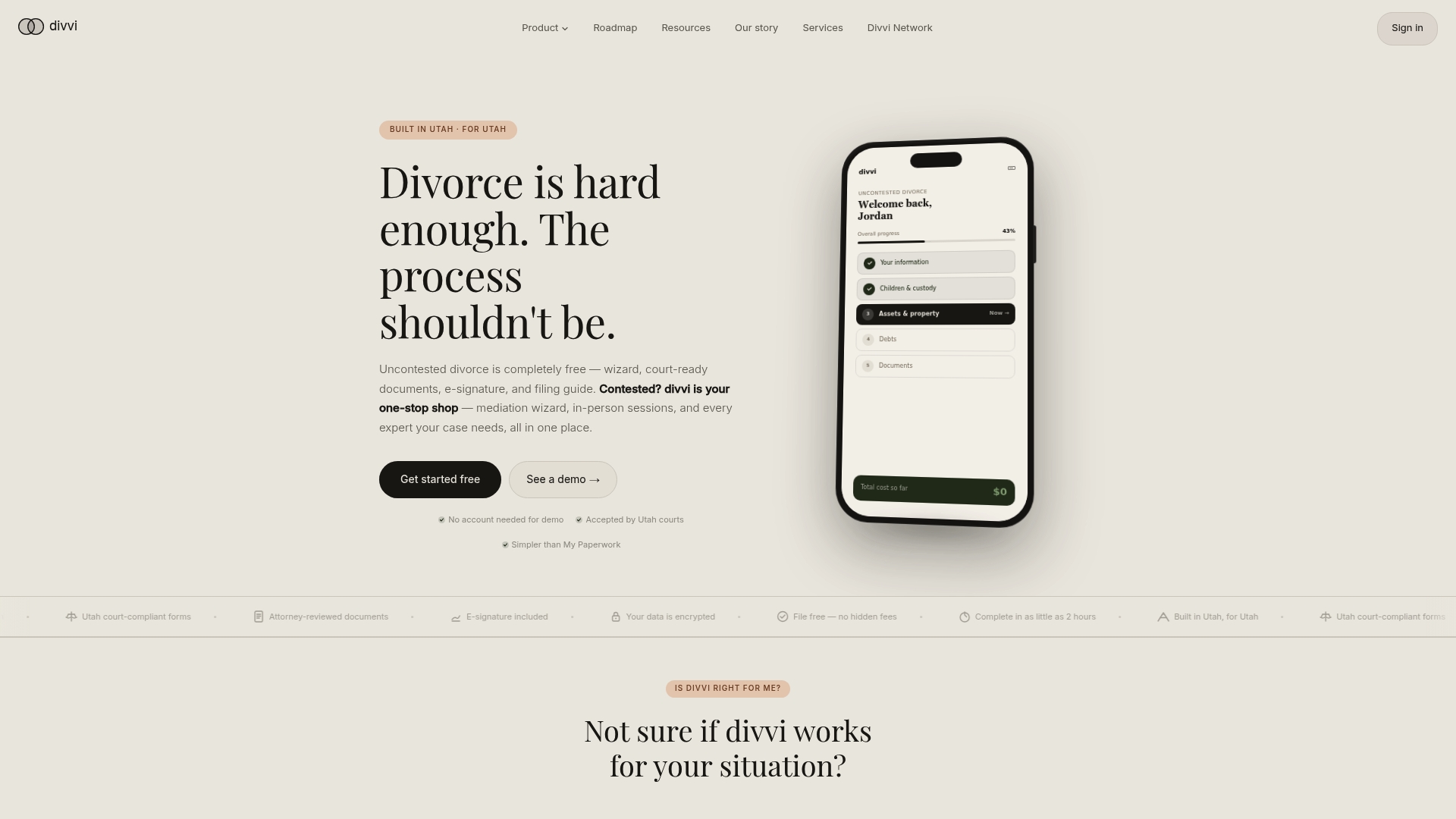
The free divorce wizard walks you through your specific facts and generates documents designed for filing, the same way MyPaperwork does but with added guidance on Utah-specific requirements. If you want a professional set of eyes on your paperwork before you file, Divvi's document audit service catches errors before the clerk does. When spouses hit a sticking point, Divvi connects you directly with affordable mediation to resolve it without turning the case contested. The base platform is free to use, and you pay only for the services you actually need.
FAQ
Can I file for divorce in Utah without any legal help?
Yes. Utah permits self-representation in divorce cases, including contested cases. You still must meet the filing requirements and follow court procedures. Consider legal help for disputed custody, complex property or other issues you are not comfortable handling.
How long does a DIY divorce take in Utah?
An uncontested self-filed divorce in Utah typically takes 3–5 months from filing to final decree. The usual 30-day waiting period, applicable education requirements and court review affect timing. A court may waive the waiting period in extraordinary circumstances.
What happens if my spouse refuses to sign the divorce papers?
If your spouse will not sign an Acceptance of Service, you must serve them through a process server or the county sheriff. If they contest the divorce, the case moves to a contested process that typically takes 6–12 months and often requires mediation or attorney involvement.
Do I need a lawyer if we have children?
Not necessarily, but you must complete the Divorce Orientation course ($30) and the Divorce Education course ($35) before the court finalizes your divorce. You also need a court-approved Parenting Plan and Child Support Worksheet, both of which MyPaperwork or Divvi can help you prepare.
What is limited-scope representation and when should I use it?
Limited-scope representation means hiring an attorney to review or draft specific documents rather than handle your entire case. It is the right choice when your divorce involves retirement accounts, business assets, or a custody arrangement where you want professional input without paying for full representation.